Quick Answer
If you are looking for the best Diablo build in HOTS and how to actually carry fights with his combos, this guide breaks it down in a practical, real-match way. Diablo is a displacement tank who punishes bad positioning harder than almost anyone in the game, using walls, flips, and terrifying follow-up to force kills.
This guide covers the best Diablo build, gameplay tips, and real-match decision making to help you win more games.
Diablo is one of the most explosive tanks in Heroes of the Storm because one clean combo can instantly change the fight. He does not just start fights. He bends them around terrain, punishes greed, and turns small positioning mistakes into very expensive deaths.
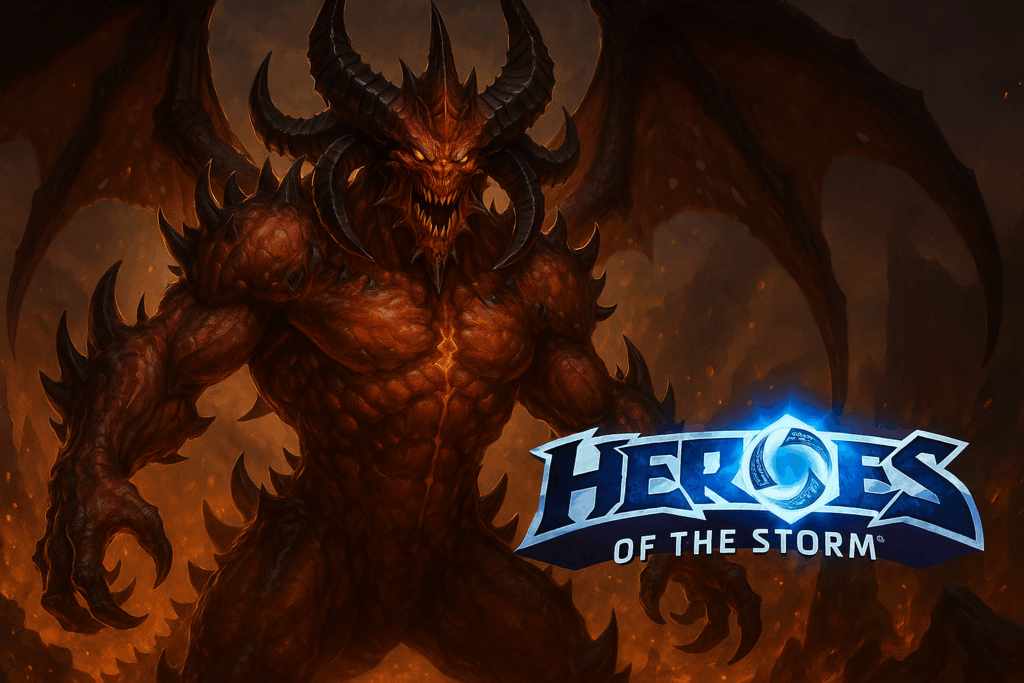
Hero Identity and Role Breakdown
Diablo is the tank for players who like making fights feel unfair. His best moments come when an enemy walks one step too close to a wall and suddenly disappears from the game. He has huge pick threat, excellent follow-up, and enough frontline presence to stay relevant even when the perfect combo is not there.
He also punishes sloppy Diablo play hard. If you engage without souls, without a wall, or without follow-up, you can die much faster than people expect. The hero rewards preparation. Good Diablos are always checking terrain, cooldowns, and whether their team is actually ready to capitalize.
Diablo Abilities Explained
Black Soulstone (Trait) gives you more durability as you collect souls, which makes death much more costly when you lose them. Shadow Charge (Q) is your wall setup and gap closer. Fire Stomp (W) adds steady damage and sustain with the right talents. Overpower (E) flips a target behind you and is the heart of many Diablo combos. Apocalypse creates huge setup across the fight, while Lightning Breath gives sustained teamfight damage and zoning.
How to Play Diablo (Step-by-Step)
- Track your soul count before any major fight because low-soul Diablo is a much riskier tank.
- Fight around walls and terrain whenever possible.
- Decide whether Shadow Charge starts the combo or saves the target for a better Overpower angle.
- Use Overpower with purpose, not just because the button is up.
- Choose your heroic based on whether the game needs burst setup or sustained pressure.
How to Play Diablo Effectively
The most important thing on Diablo is understanding that your combo matters more than your bravado. The hero looks fearless, but the best Diablo players are actually very selective. They do not just run at the nearest target. They wait for the wall angle, the overstep, or the moment a target is too far from help. When Diablo is played well, he does not simply start fights. He starts the exact fight the enemy did not want to take, and that wins games much harder than random aggression ever will.
Terrain is half the hero. Diablo without walls is still useful, but Diablo with walls is terrifying. That means positioning before the fight matters almost as much as the combo during it. If you move the fight toward terrain your team can punish, you make your life much easier. If you take the fight in open space, you often cut your own value in half. In real matches, this is the difference between a Diablo that feels oppressive and one that just feels large. A clean wall combo does not just deal damage. It forces panic, burns cooldowns, and often hands your team the first kill before the fight has properly settled.
Apocalypse is the more surgical heroic. It shines when your team can follow stuns cleanly and when one catch can instantly crack the fight open. Lightning Breath is steadier and often better when the fight will turn into a full brawl and you want to punish clustered movement over time. If you are newer to Diablo, keep the rule simple: if your team wants burst setup, think Apocalypse; if your team wants sustained objective pressure, think Lightning Breath. Mastering this mindset alone will already make you more impactful than most Diablo players.
Best Diablo Builds (Level 1 to 20)
Devil's Due at level 1, Souls to the Flame at level 4, Soul Shield at level 7, Lightning Breath at level 10, Hellfire at level 13, Domination at level 16, and Hellstorm at level 20.
Gameplay Focus - Sustained Teamfight Diablo
This build gives Diablo stronger brawling value and more consistent presence after the initial combo. Lightning Breath makes objective fights and clustered battles miserable for the enemy, especially if they have to stand in choke points. Instead of putting all your pressure into one pick window, this path lets you stay threatening even after the opener, which matters a lot on maps where teams are forced to fight in narrow space for several seconds at a time.
What makes the build feel good in real matches is that it smooths out Diablo's rhythm. You still want your wall combo, but you are not completely dependent on it being the only thing that matters. Devil's Due and the shield value keep you sturdier in repeated trades, while Lightning Breath gives you a real punish button once the enemy starts clumping, retreating awkwardly, or trying to fight through a corridor. This is the version of Diablo that slowly turns an objective fight into a furnace and dares the enemy team to stay inside it.
It is especially strong when the opposing draft has to stand together to function or when your own team wants a tank who can engage first and still remain threatening after the first burst window passes. This build wins fights by making the enemy choose between standing in terrible space or giving up control of the area entirely.
In short, this build is best when you expect larger teamfights, repeated choke battles, and a game where Diablo needs to stay dangerous even after the first engage lands.
Alternative Diablo Build (Level 1 to 20)
Devil's Due at level 1, From the Shadows at level 4, Diabolical Momentum at level 7, Apocalypse at level 10, Devastating Charge at level 13, Domination at level 16, and Dying Breath at level 20.
Gameplay Focus - Combo Pick Tank
This is the terrifying wall-combo version of Diablo. It rewards aggressive positioning, sharp target selection, and teams that know how to instantly explode someone when your combo lands. This is the build that makes Diablo feel unfair, because when it is working, the enemy backline does not get to misstep even once.
The reason this path hits so hard is that it tightens Diablo's identity around one brutal truth: if you stand in the wrong place, you die. From the Shadows and Devastating Charge make your combo cleaner and harder to escape, Diabolical Momentum helps your cooldown flow feel relentless, and Apocalypse gives you that extra layer of setup when one pick is all your team needs. In real matches, this is the build that punishes impatient mages, greedy healers, and anyone who forgets that walls are part of the fight against Diablo.
It does ask more from you. You need sharper angle awareness, better target discipline, and a real understanding of whether your team can actually kill what you catch. But when all of that lines up, this build does more than create pressure. It ends fights before the enemy comp ever gets to play them properly.
In short, this build is best when one caught target can decide the fight, your team has immediate follow-up, and you want Diablo at his most explosive and punishing.
Why This Build Wins Real Fights
The default Sustained Teamfight Diablo plan wins because this build gives Diablo stronger brawling value and more consistent presence after the initial combo. That is usually where the enemy loses its clean first answer and the fight starts feeling much harder to play.
The alternative Combo Pick Tank plan is the better answer when this is the terrifying wall-combo version of Diablo. Pick the wrong one and Diablo becomes hard to kill without being the reason the fight changed.
Why Most Diablo Players Lose Fights
Most Diablo players do not lose because the hero is weak. The hero usually falls apart when you force the first button instead of the right fight state.
The consequence is always the same: you started the fight on the wrong second, so the enemy still gets a clean engage or a free escape.
That is why good Diablo games feel oppressive and bad ones feel fake: the engage lands when the enemy is actually punishable, not when you got impatient.
Real Match Situations
The enemy assassin keeps hovering near a fort wall or shrine pillar. That is Diablo territory. You do not need a huge engage. You just need one clean angle.
You are low on souls before a major objective. That changes everything. Sometimes the right play is patience and soul recovery, not pretending you are still at full tank confidence.
The enemy frontline is obvious, but their mage is standing just badly enough behind them. A good Diablo sees the real target through the clutter and turns the fight instantly.
One Thing to Know
Diablo does not win because he engages first. He wins because he engages where the enemy cannot recover.
What Changes Through the Match
Early game Diablo is about soul management and clean punish windows. Mid game is where heroic choice starts deciding fight shape. Late game, every wall combo becomes terrifying because one pick can end the objective or the core race on the spot. The later the game goes, the more precise he needs to be.
Advanced Tips
Do not autopilot Shadow Charge first. Sometimes Overpower setup creates the cleaner wall, especially when the target is already stepping too close and only needs a small positional change to become punishable. Good Diablo players are constantly checking which part of the combo is actually cleaner in this exact moment instead of treating every engage like a fixed script.
Fight near terrain on purpose. Good Diablo positioning begins before the combo. If you drift fights toward forts, shrine pillars, camp walls, or tight objective corners, you massively increase the number of angles that can win the fight on contact. This sounds simple, but in real matches it is one of the biggest reasons strong Diablo players feel oppressive even before they cast anything.
Track souls constantly. Your confidence should match your trait state. Full-soul Diablo can take risks that low-soul Diablo absolutely should not. A lot of bad Diablo engages happen because the player is mentally playing a tankier version of the hero than the current trait actually allows.
Apocalypse is strongest when it narrows movement, not when it looks flashy. The best Apocalypse casts force enemies to dodge into terrible paths, bad terrain, or your team's damage, even if the initial visual does not look spectacular. It is a heroic that wins harder when it controls decisions than when it simply chases a highlight clip.
When Not to Pick Diablo
Diablo is amazing when fights happen on his terms, but he has rough games too. Open maps and very mobile drafts can reduce his combo reliability, and dying with low-value engages hurts him more than many tanks because of the soul mechanic. He also needs teammates who understand how hard to commit when he finds the right target.
If your team has no follow-up or the enemy never has to respect your control, the pick stops being frontline value and starts being wasted setup.
FAQ
Is Diablo good in solo queue? Yes, especially because players misposition constantly and Diablo is excellent at punishing that.
When should I take Apocalypse over Lightning Breath? Take Apocalypse when your team can follow crowd control instantly. Take Lightning Breath when fights are more extended or the enemy has to clump.
Why do my combos feel inconsistent? Usually because the terrain was bad, the target was wrong, or your team was not in position to capitalize.
Should I always dive the backline? No. Dive what you can actually punish. The ideal target is not always the reachable target.
What improves Diablo the fastest? Learning to plan engages around walls instead of around the nearest enemy body.
Related Guides
If you enjoy tanks that punish positioning, also check our Garrosh guide, Anub'arak guide, and Muradin guide.
Final Thoughts
Diablo is one of the most dangerous tanks in HOTS when you enjoy clean punishment and high-impact engages. If you master these fundamentals, Diablo becomes one of the most explosive fight-starting tanks in the game.